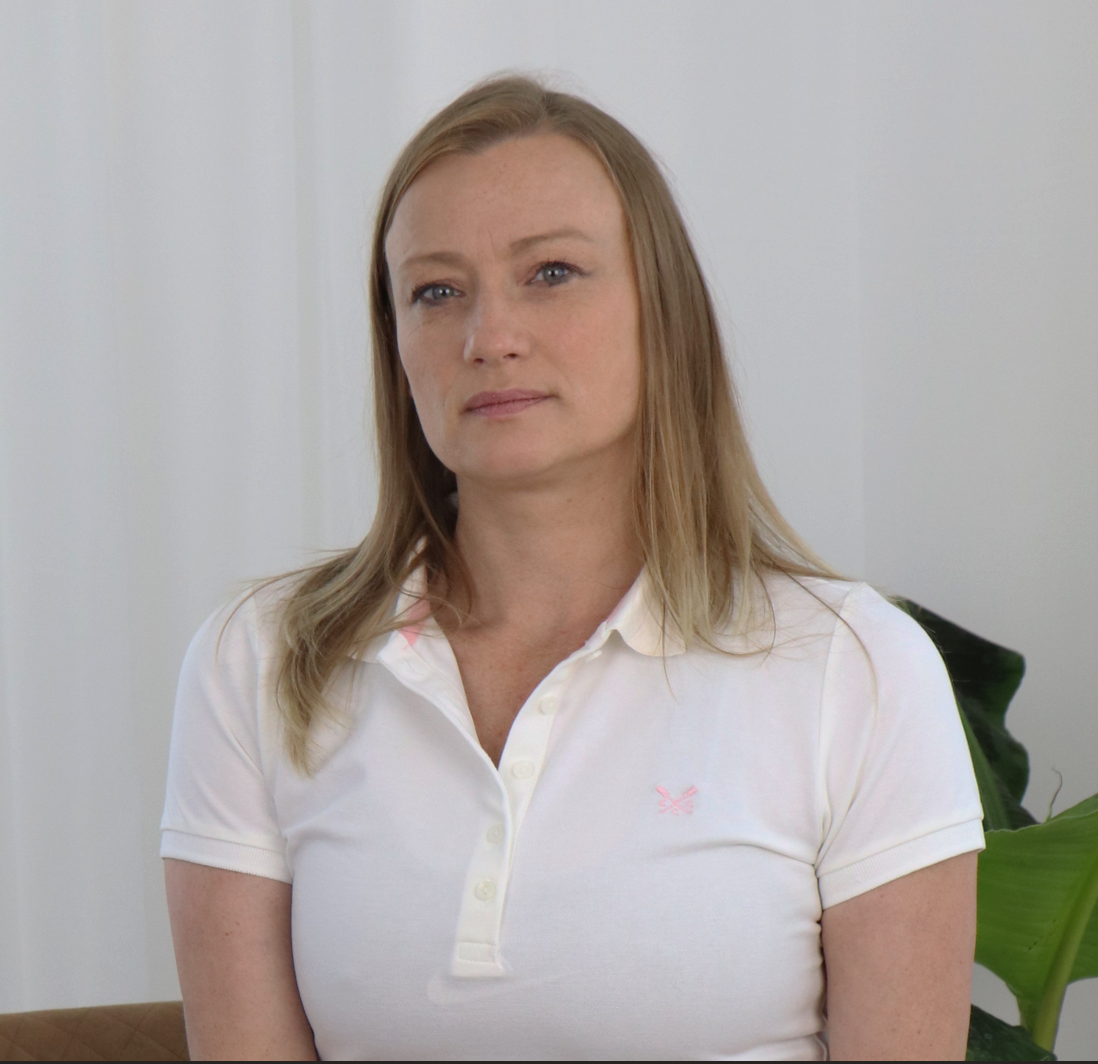
Samantha qualified as a Personal Trainer in 2016, one year after gaining her fitness instructor qualification and working in her local gym. Her background is rooted in military training and competitive sport: she competed with the local Army Cadets in her teens and represented at national level in athletics and swimming.
Samantha later joined the Army, where she excelled in all things physical. Her experience spans adventure training, skiing, hiking, and distance marching. While serving as an apprentice in Aldershot she completed demanding events including the RAF Benson march (50 miles over 2 days) and the Nijmegen Marches (100 miles over 4 days, carrying weight). She also trained and worked in field cookery, serving as a Chef — a role that combined practical skill, discipline and endurance.
This mix of competitive sport, military rigour and hands-on coaching shapes Samantha’s approach to training: disciplined, results-focused and rooted in real-world resilience. She brings proven endurance, technical skill and a no-nonsense attitude to help clients build sustainable fitness and confidence.
When Samantha became a Personal Trainer for a reason that was less about a career plan and more about health. Confused by a cascade of unexplained symptoms, she sought answers through movement, nutrition and the discipline of training. Over the next ten years those seeking answers became diagnoses: chronic fatigue syndrome / myalgic encephalomyelitis (CFS/ME) a stress-related illness that further shaped — and restricted — her capacity to train.
Those experiences rewired Samantha’s approach to fitness. Where others might chase intensity and rapid progression, she learned to listen. Recovery, pacing and sustainable habit design became her primary tools. She learned to read the body’s quiet signals: the hours of rest needed after a busy week, the subtle weight of cognitive fatigue after an emotionally demanding day, the difference between productive soreness and an energy debt that would set her back.
Her training philosophy now centers on three bold commitments:
Respect the individual rhythm: progress happens more often through consistency than through extremes. Programs are built around life, not life around training.
Prioritise recovery as strategy: sleep, nutrition, stress management and thoughtfully timed activity are core pillars, not optional extras.
Teach for independence: clients learn the language of their bodies so they can self-regulate, adjust intensity and maintain gains through life’s upheavals.
Samantha’s journey gives her rare credibility with clients who struggle with chronic health conditions, burnout or the fear of “doing too much.” She creates programs that are adaptable, measured and compassionate — designed to restore confidence in movement while protecting long-term wellbeing.
At Embrace Life, Samantha’s story is part of our promise: fitness that’s brave enough to be realistic and bold enough to change lives for the long term.
Samantha believes lasting fitness and true longevity begin with the basics. That’s why every session, programme and conversation at Embrace Life centres on the foundations — movement quality, balanced strength, efficient breathing, recovery and consistent, sustainable nutrition. Get these right and you build upward with confidence; skip them and you’re building on sand.
What that looks like in practice
Movement first: teach and refine safe movement patterns before loading or adding complexity.
Strength sensibly: progressive loading that prioritises joint integrity and functional strength for life, not just the mirror.
Recovery engineered: sleep, active rest, eating well are as important as training intensity.
Nutrition for habits: practical, flexible guidance to support energy, performance and long-term health.
Why this matters Focusing on fundamentals reduces injury risk, improves performance and makes fitness something you can keep doing — not something that burns out or breaks you. It also creates resilience: for everyday life, for sport, for the long run.
At Embrace Life — whether personal training, group exercise, nutrition support or workplace wellbeing — Samantha’s work
Samantha launched Body Conditioning classes in 2018 in Amesbury and Wilton, quickly becoming a favourite with the local community. Body Conditioning is Samantha’s own evolution of PIYO (Pilates + yoga) fused into a workout-style class that prioritises slow, controlled movement. The approach builds balance and functional strength, giving participants confidence and sustainable fitness gains without harsh impact or extreme intensity.
Samantha created Body Conditioning because she saw the limits of military-style bootcamp and CrossFit-type classes for the general population. Her experience taught her that high-intensity, punitive training is rarely appropriate for lifelong health and everyday people. Instead, Samantha’s method emphasises joint-friendly progressions, mobility, core stability and breath — the foundations for resilience and long-term fitness.
Her experience extends beyond group classes. Samantha spent 18 months delivering exercise and nutrition education to NHS patients with lifestyle-related chronic illnesses, adapting coaching to meet medical needs and creating realistic habit changes. She also worked one-to-one with personal training clients across a wide range of goals, from rehabilitation and mobility to strength, weight management and improved daily function.
The result: a practical, compassionate program that helps people move better, feel stronger and achieve lasting results without the drama of extreme training.
Samantha believes lasting fitness and true longevity begin with the basics. That’s why every session, programme and conversation at Embrace Life centres on the foundations — movement quality, balanced strength, efficient breathing, recovery and consistent, sustainable nutrition. Get these right and you build upward with confidence; skip them and you’re building on sand.
What that looks like in practice
Movement first: teach, refine and facilitate safe movement patterns before loading or adding complexity.
Strength sensibly: progressive loading that prioritises joint integrity and functional strength for life.
Recovery engineered: sleep, mobility work and planned de-loads are as important as training intensity.
Nutrition for habits: practical, flexible guidance to support energy, performance and long-term health.
Focusing on fundamentals reduces injury risk, improves performance and makes fitness something you can keep doing — not something that burns out or breaks you. It also creates resilience: for everyday life, for sport, for the long run.
‘Get the fundamentals down and the level of everything you do will rise’ - Michael Jordan